

This post is also available in:
 Português
Mt.Gox and how they Gox'd me!
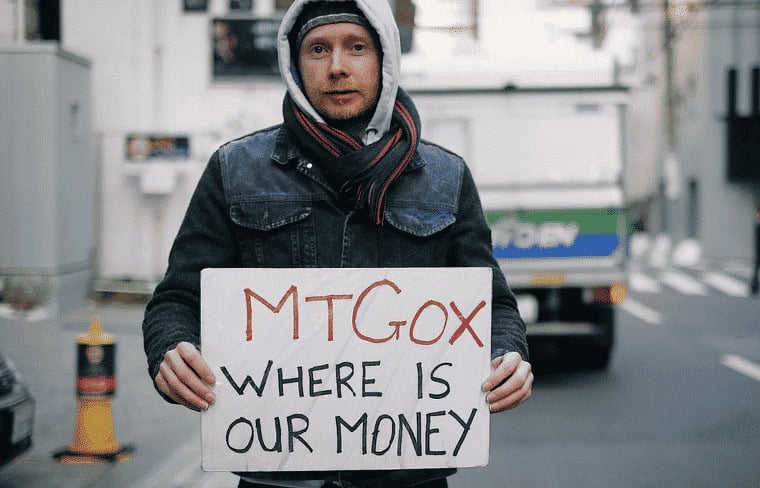
MT.Gox is the horror story we all know and love. Hey, we are crypto & we breathe decentralization! We breathe trustless! Oops! Surprisingly, we use the majority of the exchanges daily. 100% centralized, exposing us to a major risk.
Thus, this is in complete contrast with the original vision of cryptocurrency. Most importantly, despite its massive successes, it aims to provide privacy and be decentralized. Centralized exchanges remain vulnerable to security attacks and government regulation. (See 1Broker, Mt. Gox, and dozens of hacked exchanges).
It is somewhat embarrassing. Secondly, there are major issues with crypto exchanges in this space. Which is waving the “Decentralization of the world.” It flags all the time but seems unable to use our tech. We advertise in a way that makes sense. There are some live DEXs, but have you ever tried using them?
Don't bother. Let's check three decentralized exchanges against the old Mt. Gox that are promising. Most investors and traders prefer decentralized exchanges (DEX) since they offer enhanced privacy and transparency. Besides privacy and transparency, DEX does not require third-party intermediaries. Hence, DEX transactions are much faster and less costly than a centralized exchange. This is not yet the case with the current offering of live DEX's.
Table of Contents (click to expand)
State of Decentralization with Exchanges:
The current state is that decentralized exchanges come with a few drawbacks. First, they are less user-friendly and require users to have a complex understanding of their processes and operations. Secondly, unlike centralized exchanges, DEXes often offer few advanced features and functionalities, such as stop-loss, stop-profit, and Margin trading.
Consequently, below we look at some upcoming Decentralized Exchange platforms that crypto users can look to. Avoid the Mt.Gox scams.
Anti – Mt.Gox Exchanges
Altcoin.io inside scoop
Altcoin.io is one of my favorite projects, which recently closed its fundraising (they did NOT want to do an ICO). For example, Altcoin.io DEX plans to leverage atomic swaps to perform secure, affordable, fast, and reliable transactions on a payment platform powered by smart contracts. Atomic swaps allow the exchange of a coin for another without a third party. Although the project was founded in 2017, it is yet to be launched for use. Developments are still underway to solve cross-chain interoperability and add advanced trading tools and interfaces. Far better than the old Mt.Gox
The altcoin.io decentralized platform offers numerous security benefits to users. First and foremost, users can retain their coins while transacting; hence, even in the event of an attack on the exchange platform, users cannot lose their coins. Users are given a unique key upon creating a wallet on the platform. Users' funds are locked on a blockchain accessible only to users. Altcoin.io wallets will be locked with complex passphrases, adding an extra layer of protection through encrypted passwords. Furthermore, they aim to be the first DEX that provides social trading features: Social trading features Mt.Gox missed.
Looking forward
According to its blueprint, Altcoin.io aims to provide a user-friendly interface that makes it easy to interact. The project also promises 24-hour customer support upon starting operations. Altcoin.io also promises to provide an instant exchange for various coins and tokens. The platform we can see in the website's preview mode looks pretty neat, and I think we can really expect something good here.
Website: Altcoin.io
Launch Date: Q4 2018
Aphelion
Aphelion is a decentralized application protocol built on the NEO blockchain that enables peer-to-peer transactions to occur directly on the network. The platform is powered by a distributed Exchange Asset Ledger (DEAL). The platform aims to create a collaborative, open-source platform that enables decentralization and the distribution of digital assets. APH tokens act as an escrow mechanism, ensuring that the transaction terms are fulfilled and verified. These are features we only wish Mt.Gox had back in the day.
Aphelion leverages the NEO blockchain's open-source platform and fast transaction speeds. NEO supports a remarkable 10,000 transactions per second, compared to Ethereum’s 20 and Bitcoin's 3. Further, Aphelion enables data transfer using Distributed Ledger Technology without a central administrator.
Aphelion aimed to be the first decentralized exchange to reside entirely on a blockchain network as a decentralized application. One will only require an open-source interface to control smart contracts and access data to transact on the Aphelion platform. They launched.
Website: https://aphelion.org/
Launch Date: 10/10/2018
Binance DEX
Binance, one of the largest cryptocurrency exchanges by trading volume, has recently unveiled its decentralized exchange. The company has yet to officially launch the DEX; however, they have revealed a demo version of the new platform that could eventually replace the current centralized system. (Read our review on the centralized exchange in our Binance review)
Binance DEX will be built on the public blockchain project Binance Chain. The Binance Chain will predominantly focus on trading and transferring digital assets, as well as developing new ways to distribute blockchain assets. Overall, the Binance Chain aims to launch a highly powerful, dynamic platform that is both liquid and simple to use, while supporting all trading activities on Binance. The Binance coin (BNB) is an ERC20 token; however, it will likely eventually transition to a token on its blockchain.
Website: binance.com
Launch Date: Q4 2018 / Q1 2019
PRO TIP
Integrating a hardware wallet with a DEX offers significant advantages for cryptocurrency users, notably in asset control, security, and true ownership. Hardware wallets, which safeguard private keys offline, act as a robust defense against online risks such as hacking. When paired with a DEX, these wallets ensure private keys remain within the device during transactions, drastically reducing the risk of unauthorized access.
This method offers unparalleled control over digital assets. Users manage their funds directly, bypassing intermediaries. This not only adheres to blockchain's decentralization principles but also reduces dependence on third-party security, often a target for breaches.
Moreover, using a hardware wallet with a DEX epitomizes true ownership of digital assets. Unlike centralized exchanges where the platform holds the private keys, hardware wallets give users complete control and ownership of their cryptocurrencies. This approach resonates with the decentralized ethos of cryptocurrencies and promotes the key idea of self-sovereignty in managing digital assets.
Conclusion
The current presence of centralized cryptocurrency exchanges is a paradox, given the fundamental principles underlying cryptocurrencies. Mt.Gox need not apply in our new world.
While crypto has attempted to move into DEX in the last few years, most current platforms are grossly inefficient and difficult to use. Platforms like Altcoin.io, Binance DEX, and Aphelion promise to revolutionize the stage. It remains to be seen whether they will achieve their lofty ambitions or if this is just another over-hyped trend.
Frequently Asked Questions
DEXs provide enhanced security and privacy compared to centralized exchanges due to their decentralized nature. Since they operate on blockchain technology, they don't require intermediaries or central authorities to oversee transactions. Users' funds and private keys remain under their control, reducing the risks of hacking and data breaches. Additionally, DEXs often require minimal personal information from users, thus ensuring greater privacy.
Smart contracts are pivotal to DEXs' operations. They are self-executing contracts with the terms of the agreement directly written into code. In DEXs, smart contracts automate and enforce order execution without human intervention. This automation ensures that trades are executed according to predefined rules, enhancing trust and efficiency in the trading process.
DEXs typically allow a more open, less regulated process for listing new tokens than centralized exchanges. This openness promotes innovation and diversity in the crypto space. However, it also means traders may encounter more low-quality or potentially fraudulent tokens. Therefore, traders should conduct thorough research and exercise due diligence before trading new or unfamiliar tokens on DEXs.
