

This post is also available in:
 Português
Buying cryptocurrency is exciting. Watching your portfolio grow is even better. However, there comes a moment every investor asks the same question: how do I actually cash out my crypto safely? Surprisingly, this is where many people make expensive mistakes.
Some choose an exchange with high withdrawal fees. Others transfer funds to banks that do not handle crypto transactions well. Some even lose money because they withdraw during periods of low liquidity or forget that selling cryptocurrency may trigger taxes in their country.
The good news is that cashing out crypto has never been easier. Today, regulated exchanges, crypto-friendly banks, and modern crypto debit cards allow investors to move between digital assets and traditional money faster than ever before. Nevertheless, choosing the right method still matters.
At SmartOptions, we have reviewed exchanges, wallets, crypto services, crypto signal groups, and trading platforms for years. During that time, we have seen the industry mature from a niche market into a global financial ecosystem worth trillions of dollars. More importantly, we have learned that the cheapest option is not always the best one. Security, liquidity, banking relationships, and customer support often make a much bigger difference than saving a fraction of a percent on fees.
This guide explains exactly how to cash out crypto in 2026. Whether you own Bitcoin, Ethereum, Solana, XRP, or another digital asset, you will learn the safest withdrawal methods, how to avoid common mistakes, and which services make the process much smoother.
You will also discover when it makes more sense to use a crypto debit card instead of a bank transfer, why some banks temporarily freeze crypto-related payments, and how new regulations such as MiCA are changing the relationship between cryptocurrency and traditional finance.
By the end of this guide, you should have a clear strategy for converting your cryptocurrency into cash while minimizing costs, reducing risks, and protecting your profits.
Why Cashing Out Crypto Is More Important Than Buying It
Most beginners spend weeks researching which cryptocurrency to buy. They compare Bitcoin with Ethereum, read price predictions, and look for the best exchange. However, very few people consider what happens after their investment increases in value.
That is a mistake. A well-planned exit strategy is just as important as choosing the right investment. After all, profits only become real once they are secured.
Imagine buying Bitcoin during a market correction. Months later, the price doubles, and you decide to sell. If your exchange has limited banking options, your bank blocks the transfer, or you face unexpectedly high withdrawal fees, your positive experience can quickly become frustrating.
Planning ahead helps you avoid these problems. It also allows you to compare exchanges, understand local regulations, and prepare any identity verification before you need to move large amounts of money.
Professional investors often decide how they will cash out long before they make their first purchase. That approach removes emotions from the decision and makes it easier to stick to a long-term investment strategy.

Can You Legally Cash Out Cryptocurrency?
Yes. In most countries, it is perfectly legal to convert cryptocurrency into your local currency through regulated exchanges and payment providers. However, the rules differ depending on where you live.
For example, many European countries now operate under the Markets in Crypto-Assets (MiCA) framework, which creates clearer rules for crypto service providers. Meanwhile, countries such as the United States, the United Kingdom, Canada, and Australia continue to develop their own regulatory approaches.
Although regulations differ, one thing is becoming increasingly clear. Governments are no longer trying to stop cryptocurrency. Instead, they want transactions to be transparent, secure, and compliant with anti-money laundering requirements.
That is why reputable exchanges now require Know Your Customer (KYC) verification before allowing larger withdrawals. While this may seem inconvenient, it actually provides additional protection for investors and makes it easier to work with traditional banks.
The Five Most Popular Ways to Cash Out Crypto
There is no single method that works for everyone. The best option depends on your country, the amount you want to withdraw, how quickly you need the money, and whether you plan to continue investing. The five most common methods are:
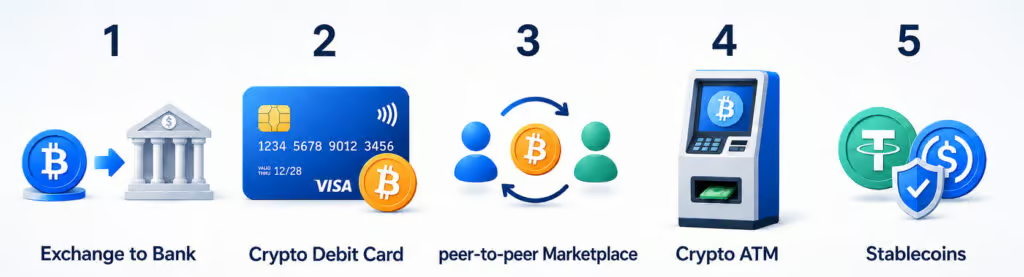
- Selling your cryptocurrency through a regulated exchange and withdrawing directly to your bank account.
- Spending your crypto using a crypto debit card that converts your digital assets at the point of sale.
- Selling directly to another individual through a peer-to-peer marketplace.
- Withdrawing cash through a crypto ATM.
- Converting volatile cryptocurrencies into stablecoins before deciding when to transfer funds to your bank.
Each option has its own advantages and disadvantages. Throughout the rest of this guide, we will compare them in detail so you can choose the solution that best matches your investment strategy.
Before You Sell: Five Questions Every Investor Should Ask
Before clicking the sell button, take a moment to consider a few important questions on how to cash out crypto:
- How much cryptocurrency are you planning to withdraw?
- Do you need the money immediately, or can you wait a few business days for a lower-cost bank transfer?
- Does your current bank support transfers from cryptocurrency exchanges?
- Will selling today create a taxable event in your country?
- Finally, are you selling because your investment strategy tells you to, or are you reacting emotionally to short-term market movements?
These questions may seem simple. Nevertheless, answering them before making a withdrawal can save you money, reduce stress, and help you avoid costly mistakes.
In the next section, we will compare every major cash-out method, including exchanges, crypto-friendly banks, debit cards, peer-to-peer marketplaces, and crypto ATMs, so you can determine which option offers the best balance between speed, cost, security, and convenience.
Comparing the Best Ways to Cash Out Crypto
Now that you have a better understanding of what to consider before selling your cryptocurrency, it is time to compare the different withdrawal methods. Each option has its own advantages, and the right choice depends on your investment goals, the amount you are withdrawing, and how quickly you need access to your funds.
Over the past decade, the cryptocurrency industry has matured significantly. Years ago, investors had only a handful of exchanges to choose from, and withdrawing profits could take days or even weeks. Today, regulated exchanges, crypto-friendly banks, and debit cards have made the process considerably easier. Nevertheless, not every solution performs equally well.
The table below compares the most popular cash-out methods.
| Method | Speed | Fees | Security | Best For |
|---|---|---|---|---|
| Regulated Crypto Exchange | High | Low | Excellent | Most investors |
| Crypto Debit Card | Instant | Low | Excellent | Everyday spending |
| Bank Transfer | Medium | Very Low | Excellent | Large withdrawals |
| Peer-to-Peer Marketplace | Medium | Variable | Medium | Flexible payment methods |
| Crypto ATM | Instant | High | Medium | Small cash withdrawals |
| Stablecoins | Instant | Very Low | Excellent | Locking in profits |
Although every method has its place, regulated exchanges remain the preferred option for most investors because they combine liquidity, security, and transparent pricing.
Cash Out Crypto Through a Cryptocurrency Exchange
For most people, selling cryptocurrency through a reputable exchange is still the easiest and safest option. Modern exchanges provide deep liquidity, competitive trading fees, and direct banking integrations. As a result, converting Bitcoin, Ethereum, Solana, XRP, or other cryptocurrencies into your local currency usually takes only a few minutes.
However, there is one mistake many beginners make. They focus almost entirely on trading fees while ignoring withdrawal fees and banking support. Saving 0.10% on a trade is meaningless if your bank transfer takes five days, your bank blocks the payment, or customer support takes a week to respond.
At SmartOptions, we always recommend looking beyond the headline trading fee. Instead, compare:
- Withdrawal fees
- Daily withdrawal limits
- Supported banking methods
- Liquidity
- Customer support
- Security history
- Regulatory compliance
- Proof of reserves
These factors often have a much bigger impact on your overall experience. If you are still looking for a platform, our Best Crypto Exchanges guide compares the leading exchanges based on security, fees, available cryptocurrencies, customer support, and overall usability.
Why Liquidity Matters More Than Most Investors Think
Liquidity is one of the most overlooked aspects of cashing out cryptocurrency. Imagine trying to sell $100 worth of Bitcoin. Almost every exchange can process that instantly. Now imagine selling $500,000.
Suddenly, liquidity becomes extremely important. Low liquidity can increase spreads, reduce execution quality, and even push prices lower while your order is being filled.
Professional traders therefore prefer exchanges with large daily trading volumes and strong institutional participation. This becomes even more important during bull markets, when millions of investors try to sell profits simultaneously.
Using a Crypto-Friendly Bank
Once your cryptocurrency has been sold, the next step is transferring your money into a traditional bank account. Fortunately, this process has become much smoother over the past few years. Nevertheless, some banks remain more crypto-friendly than others.
This is not necessarily because banks dislike cryptocurrency. In most cases, they simply need to comply with anti-money laundering regulations and understand where your funds originated. That is why large transfers occasionally trigger additional verification.
If your bank requests more information, do not panic. Usually, they simply want documents such as:
- Exchange account statements
- Proof of identity
- Transaction history
- Source of funds
- Tax documentation when applicable
Preparing these documents before making large withdrawals can save considerable time. We will also publish a dedicated comparison of the Best Crypto-Friendly Banks, including institutions that consistently process crypto transfers smoothly across Europe, the United Kingdom, North America, and other major regions.
Why Some Banks Freeze Crypto Transactions
One of the biggest misconceptions is that banks freeze transactions because they dislike cryptocurrency. In reality, most banks are looking for unusual activity rather than crypto itself.
Large unexpected transfers, especially from new exchanges, may automatically trigger compliance checks. You can reduce the chances of delays by:
- Completing KYC verification.
- Using regulated exchanges.
- Avoiding newly created bank accounts.
- Keeping accurate transaction records.
- Informing your bank before transferring large amounts if necessary.
Most compliance reviews are completed quickly once the requested information has been provided.
How to Cash Out Crypto: Should You Convert to Stablecoins First?
Experienced investors often do something that beginners rarely consider. Instead of immediately withdrawing everything to their bank account, they first convert part of their portfolio into stablecoins.
Why? Because stablecoins allow investors to lock in profits while delaying the final bank withdrawal. This strategy may be useful when:
- Waiting for a better exchange rate.
- Planning withdrawals over several months.
- Managing tax timing.
- Remaining active in the cryptocurrency market.
- Reducing exposure to market volatility.
Popular stablecoins include USDC vs USDT and EUR-backed alternatives. Although stablecoins reduce price volatility, they are not completely risk-free. Therefore, investors should understand the issuer, reserves, and regulatory framework before holding significant balances.
Crypto Debit Cards: One of the Most Underrated Options
Many investors assume that cashing out crypto always requires selling first. That is no longer true. Crypto debit cards automatically convert digital assets into your local currency whenever you make a purchase.
Instead of transferring money back to your bank account, you simply pay directly with your crypto balance. Depending on the provider, you may also receive cashback rewards, airport lounge access, or reduced foreign exchange fees.
For investors who regularly spend cryptocurrency, this can be considerably more convenient than making repeated bank withdrawals. Our Best Crypto Credit Cards guide will compare the leading options based on fees, supported countries, cryptocurrencies, cashback programs, and overall value.
Should You Cash Out During a Bull Market?
One of the biggest mistakes investors make is waiting for the perfect top. Nobody consistently sells at the highest price. Instead of trying to predict the exact peak, experienced investors often sell gradually. For example:
- Sell 10% after reaching a target.
- Sell another portion after the next milestone.
- Keep a long-term position for future growth.
This approach reduces emotional decision-making while ensuring that profits are actually realized. It also reduces the risk of exchanges becoming overloaded during periods of extreme market activity.
History has shown that during strong bull markets, withdrawal requests increase dramatically. As a result, support teams become busier, verification requests increase, and processing times occasionally become longer. Planning ahead usually produces better results than reacting after everyone else has already started selling.
Common Mistakes When Cashing Out Crypto
Even experienced investors occasionally make avoidable mistakes. Some of the most common include:
- Selling everything because of short-term fear.
- Ignoring tax consequences.
- Sending funds over the wrong blockchain network.
- Choosing an exchange purely because of low trading fees.
- Forgetting withdrawal limits.
- Using an unsupported bank.
- Waiting until market panic begins before withdrawing profits.
Fortunately, almost all of these mistakes can be prevented with proper planning.
Final Thoughts on How to Cash Out Crypto
Learning how to cash out crypto is just as important as learning how to buy it. The cryptocurrency industry has matured enormously over the past decade. Today, investors have access to regulated exchanges, crypto-friendly banks, payment cards, and secure withdrawal methods that simply did not exist during Bitcoin's early years.
Nevertheless, every withdrawal deserves careful planning. Choosing the right exchange, understanding withdrawal fees, preparing tax documentation, and selecting a bank that works well with cryptocurrency can save both time and money. More importantly, these decisions help protect the profits you have worked hard to build.
At SmartOptions, we believe successful investing is not only about finding the next winning cryptocurrency. It is also about knowing when to take profits, how to protect them, and how to move safely between the digital asset ecosystem and the traditional financial system.
As cryptocurrency adoption continues to grow worldwide, cashing out crypto will become even easier. However, making informed decisions will always remain one of the most valuable advantages an investor can have.
